
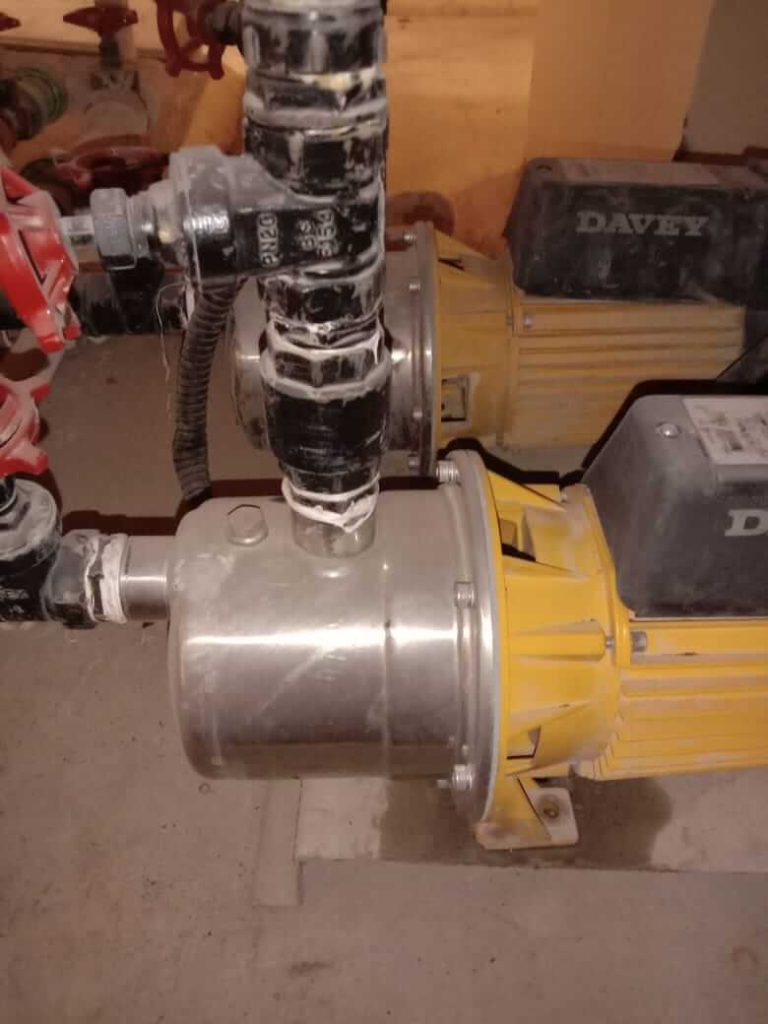
If your water pump is running but not pumping water, the most likely reason is that it has lost its prime and is spinning on air, usually because the supply tank ran low, a suction pipe is leaking air, or the foot valve or strainer is blocked. This is a common and often temporary problem in Abu Dhabi homes, but it quickly becomes serious if the pump keeps running dry, because the mechanical seal and impeller can be damaged within minutes. Switch it off first, then arrange water pressure pump repair in Abu Dhabi if a simple tank check does not solve it.
A pump that hums without delivering water is one of the most stressful household faults, because it usually shows up as dry taps in the middle of a busy morning. The good news is that the causes follow a predictable pattern, and the team at SACGM Abu Dhabi has been tracing them in villas, apartments, and commercial buildings for over 15 to 20 years.
Arabic-speaking households and building managers can find the same service information on our Arabic website, which many property teams share with their maintenance staff.
Since many pump failures start with the pipework around it, such as cracked suction lines, worn unions, or a dirty tank outlet, our visits often include a check by our plumbing specialists. To get water flowing again quickly, you can contact our team directly by phone or WhatsApp.
What Does “Running but Not Pumping” Actually Mean?
It means the motor is turning, and you can hear or feel it, but the impeller is not moving water through the system. A centrifugal pump can only push water if its casing is full of water. When air fills the casing instead, the impeller simply spins in air. This condition is called loss of prime or air lock.
There is a second, less common version: the motor hums but turns too slowly, or not at all, so it sounds like it is running when it is not. That points to an electrical fault such as a weak start capacitor.
Quick Check: Is This Temporary or Serious?
- Often temporary: the supply tank ran empty or the municipal supply was off, and the pump lost prime.
- Needs repair: the pump loses prime again and again, even when the tank is full.
- Serious: the pump is very hot, smells of burning, leaks from the shaft area, or makes a grinding noise.
A pump that repeatedly loses prime has an underlying fault. Re-priming it each time without finding the cause leads to seal damage and eventually motor failure.
Common Causes Explained
Empty or Low Supply Tank
If the ground or rooftop tank level falls below the suction pipe, the pump draws air. This often happens after a supply interruption, a stuck float valve, or very high demand on hot days. Check the tank level first. It is the simplest cause and the easiest to fix.
Air Leak on the Suction Side
Even a tiny crack or loose joint on the suction pipe lets air in. Water will not leak out because the pipe is under suction, so the problem stays hidden. Over time, the pump fills with air and stops delivering water.
Blocked Foot Valve or Strainer
The foot valve at the end of the suction pipe keeps water in the line and filters debris. Sand, tank sediment, and scale can clog its strainer or jam the flap open. When jammed open, water drains back into the tank after each cycle and the pump loses prime.
Clogged or Worn Impeller
Debris can block impeller vanes, and dry running or abrasive particles can wear them down. A worn impeller turns but moves very little water.
Closed or Partly Closed Valve
After maintenance or tank cleaning, a gate valve on the suction or discharge side is sometimes left closed. The pump runs but has nowhere to draw from or deliver to.
Damaged Mechanical Seal
The mechanical seal stops water leaking along the shaft. When it fails, often after dry running, it can let air in on suction and water out on discharge, causing both leaks and loss of pressure.
Electrical Problems
A weak capacitor can let a single phase motor hum and turn slowly. On three phase pumps, swapping wires during electrical work can reverse rotation, which makes the pump run but deliver almost no water.
Excessive Suction Lift
Surface pumps can only lift water a limited height. If a pump sits too high above the tank water level, or the suction pipe is too long or too narrow, it struggles to hold prime.
Safe Steps to Take Right Now
- Switch the pump off at its isolator to prevent dry running damage.
- Check the water level in the supply tank.
- Confirm all valves on the suction and delivery lines are open.
- Look for wet patches, loose joints, or visible cracks on the pipes around the pump.
- Feel the motor casing carefully with the back of your hand. If it is very hot, let it cool fully.
- If the tank is full and valves are open, but the pump still runs without delivering water, call a technician.
Safety note: do not open the priming plug or loosen fittings while the pump is running or under pressure, and never touch electrical connections near water. Pumps are often installed in wet or confined spaces, so take extra care.
Myths That Lead to Bigger Repairs
- “It just needs to run longer to catch the water.” Running a pump dry overheats the seal and can crack it within minutes.
- “A pump that hums is fine.” Humming without water flow is a fault, not normal operation.
- “New pumps do not lose prime.” A brand new pump on a leaking suction line will lose prime just like an old one.
- “Priming once fixes it for good.” If prime keeps being lost, there is a leak, blockage, or faulty valve that needs fixing.
Surface, Submersible, and Booster Pumps: Do Causes Differ?
| Pump Type | Most Common Reason for No Water | Typical Setting in Abu Dhabi |
|---|---|---|
| Surface centrifugal pump | Loss of prime, suction air leak, foot valve fault | Pumping from ground tank to roof tank |
| Booster pump with pressure tank | Low tank level, controller or switch fault | Boosting pressure to villa bathrooms |
| Submersible pump | Dry tank, blocked intake, cable or motor fault | Inside underground tanks and sumps |
| Self-priming jet pump | Worn jet or impeller, blocked suction | Smaller homes and garden supply |
Repair or Replace the Pump?
- Repair: suction leaks, blocked foot valves, failed capacitors, worn seals, and closed valves are all repairable.
- Repair with parts: a worn impeller or bearing can often be replaced on quality pumps.
- Replace: burnt motor windings, a cracked pump body, or a pump that is undersized for the building’s demand.
The right decision depends on the age, brand, parts availability, and whether the pump is correctly sized for the property.
How a Technician Diagnoses the Problem
- Check the tank level, valves, and pipe layout.
- Measure motor current and test the capacitor or controller.
- Confirm the direction of rotation.
- Pressure test or inspect the suction line for air leaks.
- Remove and clean the foot valve and strainer.
- Inspect the impeller and mechanical seal.
- Prime the pump correctly, test delivery pressure, and confirm stable operation.
Real Cases From Abu Dhabi Properties
The Pump After Tank Cleaning
A villa in Al Shamkha lost water the day after its ground tank was cleaned. The pump ran but delivered nothing. The cleaning crew had closed the suction valve and left air in the line. Opening the valve and priming the pump properly restored water in minutes.
The Pump That Lost Prime Every Morning
An apartment building’s transfer pump kept losing prime overnight. The foot valve flap was jammed open by grit, so the suction line drained back into the tank each night. Cleaning the strainer and replacing the foot valve stopped the problem.
The Humming Booster Pump
A homeowner heard their booster pump humming with no pressure at the taps. The start capacitor had weakened in the summer heat. A new capacitor and a shade cover over the pump fixed the issue and reduced future heat stress.
Common Mistakes Homeowners Make
- Leaving the pump switched on while the tank is empty. This is the fastest way to destroy the mechanical seal.
- Priming with hot water from the heater. Hot water can damage seals and plastic parts. Clean, cool water should always be used.
- Tightening joints with the system under pressure. This can crack fittings and cause sudden spraying.
- Buying a larger pump without checking the suction line. A bigger pump on the same leaking pipe will have the same problem.
- Ignoring small drips around the shaft. A weeping seal usually gets worse and lets air in, leading to repeated prime loss.
Avoiding these mistakes protects the pump and keeps repair work simple. If you are unsure about any step, it is better to wait for a qualified technician than to risk damaging the motor or the pipework.
Prevention Tips
- Install a float switch or dry-run protection so the pump stops when the tank is low.
- Clean supply tanks and foot valve strainers regularly.
- Inspect suction pipes and joints during routine maintenance.
- Shade outdoor pumps from direct sun to protect motors and capacitors.
- Choose a pump correctly sized for your building’s demand and lift.
Dependable Pump and Water Heater Service from SACGM
Special Air Condition General Maintenance is a trusted home and appliance repair company in Abu Dhabi with over 15 to 20 years of experience. Our certified technicians deliver Water Pressure Pump Service in Abu Dhabi, Water Pressure Pump Repair Abu Dhabi, and Water Pressure Pump Installation Abu Dhabi for surface, booster, and submersible pumps, pressure switches, and controllers from all major brands.
We also provide Water Heater Service in Abu Dhabi, Water Heater Repair Abu Dhabi, and Water Heater Installation Abu Dhabi, and many households trust us as the Best Water Heater Repair Abu Dhabi team for storage, tankless, electric, and solar systems.
Our full range includes Plumbing Service in Abu Dhabi, washing machine repair, refrigerator repair, kitchen equipment repair, TV and electronics repair, exhaust fan and hood service, garden lighting, gypsum work, tile work, artificial grass, and home décor, making us a practical partner for Appliance Repair Abu Dhabi and Home Maintenance Abu Dhabi. Call or WhatsApp +971 52 347 6261, visit Musaffah M/6 Building No: 78 Sector No: 06, Abu Dhabi, UAE, or use specialairconditiongeneralmaintenance.com. We respond promptly and provide follow-up support after every job.
Frequently Asked Questions
How do I know if my pump has lost prime?
The motor runs, but there is little or no pressure, the pump may sound louder or rattly, and the casing can heat up quickly. Little or no water reaches the taps or roof tank.
How long can a pump run without water before damage?
It varies by design, but the mechanical seal can overheat within a few minutes. That is why switching off immediately and using dry-run protection is important.
Why does my pump work after priming but stop again later?
Air is getting in or water is draining back. A suction leak, a faulty foot valve, or a low tank level are the usual causes.
Can heat in Abu Dhabi affect pump performance?
Yes. High temperatures stress motors, capacitors, and seals. Pumps in direct sun or poorly ventilated rooms tend to develop faults sooner.
Should I replace my pump if it is running but not pumping?
Not straight away. Most cases are caused by prime loss, valves, leaks, or capacitors that can be repaired. A proper diagnosis should come first.
Conclusion
A water pump that runs without pumping water has usually lost prime, drawn air, or developed a blockage or electrical fault.
Switching it off quickly prevents dry running damage and keeps the repair simple.
A certified technician can find the root cause and get steady water flowing back into your home.
