
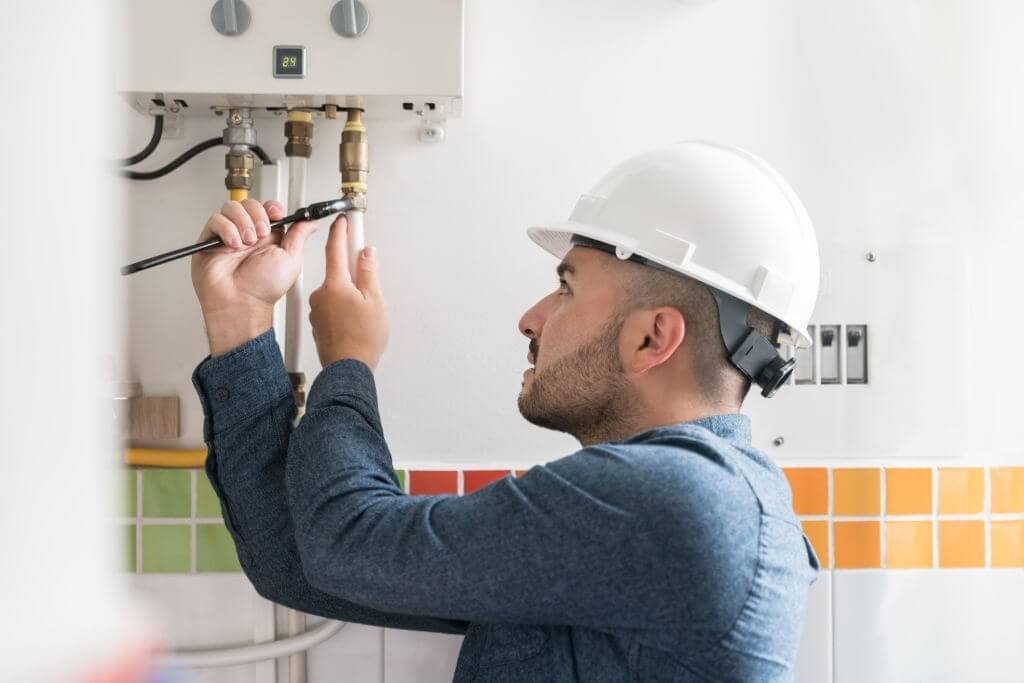
A water heater that is not heating water is usually caused by a tripped breaker, a failed thermostat or a burnt heating element. These faults are common in Abu Dhabi because hard water scale and high ambient heat wear components faster. Most are repairable, and a professional water heater repair Abu Dhabi visit, like the one on our water heater service page, can usually identify the cause in a single inspection.
Sometimes the heater is healthy and the supply is at fault. Leaks, blocked pipes or closed valves can reduce hot water even when the tank is working, so a reliable plumbing service in Abu Dhabi check can save time and money.
Weak flow is another false alarm. Hot water may seem lukewarm because pressure is low, which is a job for a water pressure pump service in Abu Dhabi specialist rather than a heater repair.
Special Air Condition General Maintenance (SACGM) is a trusted home and appliance repair company in Abu Dhabi with over 15 to 20 years of experience serving homeowners, property managers and businesses. Our certified technicians work on all major brands and models of electric, tankless and solar heaters.
If you need help now, contact us by phone or WhatsApp on +971 52 347 6261. Our workshop is at Musaffah M/6 Building No: 78 Sector No: 06, Abu Dhabi, UAE.
What Are the Most Common Reasons a Water Heater Stops Heating?
Heaters fail in predictable ways. The usual causes are listed below in the order technicians normally check them.
- No power reaching the heater (tripped breaker, blown fuse or failed switch).
- Tripped thermal cut-out or high-limit switch.
- Faulty thermostat.
- Burnt or scaled heating element.
- Wiring or terminal damage from heat or moisture.
- Tank sediment insulating the element.
- Faulty sensor or control board on tankless and solar models.
How Can You Safely Check the Basics First?
Before calling a technician, a few low-risk checks may save a visit. Do not open electrical covers or touch wiring.
- Check whether other appliances on the same circuit have power.
- Look at the breaker panel. If the heater breaker has tripped, reset it once only.
- Confirm the heater switch or isolator is on.
- Check that the thermostat dial is set to a sensible temperature.
- Look for water leaking around the tank or pipes.
- Wait about an hour after a reset to see if water begins to heat.
If the breaker trips again, stop. Repeated tripping points to an electrical fault, and continuing to reset it is unsafe.
Why Is There Only Lukewarm Water?
Failed lower or upper element
Many storage heaters use two elements. If one fails, the tank still heats a little but runs out of hot water quickly.
Scale and sediment
Hard water leaves deposits that coat elements and reduce heat transfer. The result is slow heating, noise and higher electricity use.
Thermostat set too low
A dial that has been knocked or drifted can leave water barely warm. Adjust it moderately, since very high settings raise scald risk.
Undersized tank
If a household has grown or usage has changed, a small tank cannot keep up, so the heater seems weak even though it works.
Crossed connections or mixing valves
A faulty mixer or check valve can let cold water into hot lines. This is a plumbing issue more than a heater fault.
What If the Heater Is Tankless or Solar?
Tankless (instant) heaters
These need a minimum flow rate to start. Scale in the heat exchanger, a blocked inlet filter or a failed flow sensor can stop the heater firing. Low supply pressure also prevents it from switching on.
Solar water heaters
Cloud, dust on collectors, air locks, failed circulation pumps or faulty sensors can reduce heating. Solar systems usually include an electric backup element, so a failed element may only be noticed on cloudy days or during heavy use.
Is It a Simple Fix or a Serious Fault?
| Symptom | Likely cause | Seriousness |
|---|---|---|
| No hot water, breaker tripped once | Temporary overload | Low |
| Breaker trips repeatedly | Short circuit or element fault | High |
| Lukewarm water | Scale or one failed element | Medium |
| Noisy tank | Sediment buildup | Medium |
| Water leaking from tank | Corrosion or failed seal | High |
| Rust colour in hot water | Worn anode or internal corrosion | Medium to high |
Repair or Replace: What Should You Do?
Replaceable parts such as elements, thermostats, gaskets and valves make repair sensible in most cases. Replacement is better when the tank has corroded through, the unit is more than about 10 years old, or breakdowns keep repeating.
- Repair when: the tank is sound, the fault is one part, and the heater is still efficient after descaling.
- Replace when: the tank leaks, corrosion is advanced, or the size no longer suits your household.
If replacement is needed, professional water heater installation Abu Dhabi service makes sure the new heater is sized, connected and tested correctly. Anyone searching for the best water heater repair Abu Dhabi can offer should look for clear diagnosis, certified technicians and a follow-up visit if the fault returns. Regular water heater service in Abu Dhabi also reduces the chance of a repeat fault.
What Do Technicians Do During a Repair Visit?
- Confirm the complaint and check the power supply.
- Test the thermostat, thermal cut-out and element with meters.
- Inspect terminals and wiring for heat damage.
- Check for scale, leaks and anode rod condition.
- Replace the faulty part with a compatible one.
- Flush the tank if sediment is present.
- Test temperature and safety devices before leaving.
Myths About Water Heaters That Do Not Heat
- Myth: Resetting the breaker repeatedly is fine. Repeated trips warn of an electrical fault and should not be ignored.
- Myth: Higher thermostat settings fix cold water. They raise scald risk and scale without fixing a failed element.
- Myth: The tank must be broken if it is cold. A single low-cost part is often responsible.
- Myth: DIY element replacement is easy. It involves mains power, water and sealed parts, and mistakes can cause shock or leaks.
- Myth: Solar heaters never fail. Sensors, pumps and backup elements can still fault.
Safety Reminders
Always switch off the power at the breaker before going near a heater. Never work on wiring with wet hands or while standing in water. If you smell burning, see scorch marks, hear hissing from the pressure valve or notice a bulging tank, keep away and call a certified technician immediately. Scalding water and electrical faults can both cause serious injury.
What Is a Heating Element and Why Does It Fail?
A heating element is a resistive metal rod inside the tank that turns electricity into heat. Over time, scale coats its surface, the metal weakens from repeated heating cycles, and it eventually burns out or shorts to earth. Elements are consumable parts, so replacing one is a normal part of heater life, not a sign the whole system is poor.
What Do the Thermostat and Thermal Cut-Out Do?
The thermostat measures tank temperature and switches the element on and off. The thermal cut-out, sometimes called the high-limit or reset switch, is a safety device that cuts power if the water becomes too hot.
If the cut-out trips, something caused overheating, such as a stuck thermostat or scale-insulated element. Simply resetting it may restore hot water for a while, but the cause remains. A technician should identify why it tripped.
How Can You Prevent the Problem From Returning?
- Flush the tank on a regular schedule to remove sediment.
- Replace the anode rod before it is fully consumed.
- Keep the thermostat at a moderate setting.
- Do not ignore small leaks or noises.
- Book an annual service, or twice a year for hard water and heavy use.
- Keep the heater area dry and ventilated.
How Long Does a Water Heater Usually Last?
Most storage heaters last around 8 to 12 years, though hard water and neglect can shorten this. Tankless units often last longer if descaled regularly. Solar collectors can last many years, but pumps, sensors and backup elements may need earlier replacement.
Age alone does not decide replacement. Condition, repair history and efficiency matter as much. A well-maintained ten-year-old heater can outperform a neglected younger one.
What Should You Tell the Technician When You Call?
A clear description speeds up diagnosis. Mention the brand and type, how old the heater is, when the problem started, whether the breaker trips, any noises or leaks, and whether the issue affects one tap or the whole property. Photos of the label and the problem area help our team prepare the right parts before visiting.
Does Location in the Property Matter?
Yes. Heaters installed in ceiling voids, outdoor cabinets or tight storage rooms get hot and poorly ventilated, which stresses electrical parts. Long pipe runs between the heater and the tap also waste heat and make water seem lukewarm. In these cases, insulation or repositioning the heater may be part of the long-term fix.
Support Beyond the Heater
SACGM also provides water pressure pump repair Abu Dhabi and water pressure pump installation Abu Dhabi services, as well as broader appliance repair Abu Dhabi and home maintenance Abu Dhabi support. Because hot water depends on healthy pipes and steady pressure, having one team handle both saves time. Related services include:
- Plumbing service and leak repair
- Washing machine repair
- Refrigerator repair
- Kitchen equipment repair
- TV and electronics equipment repair
- Exhaust fan and hood service
- Garden lighting
- Gypsum work and tile work
- Artificial grass and home decor
- Related home improvement services
Fast, reliable and quality service is available across Abu Dhabi. Call or message +971 52 347 6261, or visit Musaffah M/6 Building No: 78 Sector No: 06, Abu Dhabi, UAE. More details are on specialairconditiongeneralmaintenance.com.
Frequently Asked Questions
Why is my water heater on but water stays cold?
The most likely causes are a failed heating element, a faulty thermostat or a tripped thermal cut-out. A technician can test each part quickly.
How long does a water heater take to heat water?
A standard storage heater usually needs about one to two hours, depending on tank size and starting temperature. Much longer times point to scale or a failing element.
Can hard water stop a heater from heating?
Yes. Scale coats the element and insulates it from the water, which reduces heating and can eventually cause the element to burn out.
Is it dangerous to keep using a heater that trips the breaker?
Yes. Repeated tripping can indicate a short circuit or water ingress in the electrical section, so the heater should stay off until inspected.
Do you repair solar and tankless water heaters?
Yes. Our technicians handle electric storage, tankless and solar heaters from all major brands and models.
Conclusion
A heater that will not heat is usually caused by power issues, a thermostat fault or a worn element.
Simple safe checks help, but electrical and pressure faults should always go to certified technicians.
Prompt professional repair restores hot water quickly and prevents bigger damage.
