
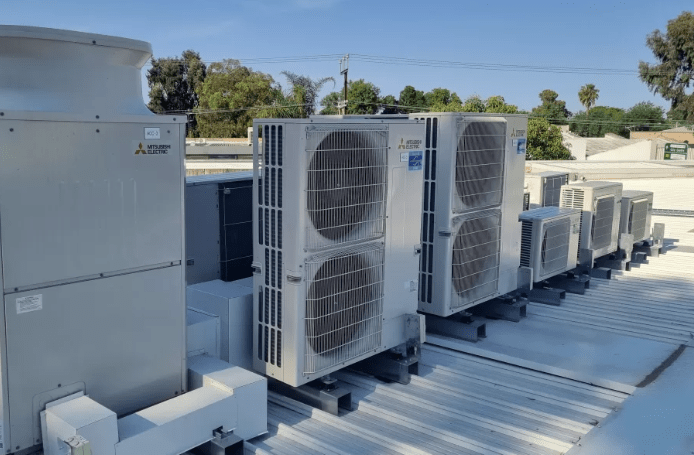
A loud banging or rattling noise from your AC usually means a loose, worn or broken part, and it needs a look within days. Minor rattles often come from loose panels or debris. Repeated banging from the outdoor unit can point to a failing fan motor or compressor, and if you live in Abu Dhabi, booking AC repair in Abu Dhabi early costs far less than waiting for the part to let go.
Here is the quick split. A rattle that stops when you press a cover is minor. Banging that comes with warm air, a tripping breaker or a burning smell is urgent, so switch the unit off at the wall. A regular AC maintenance routine catches most of these sounds before they grow.
Special Air Condition General Maintenance (SACGM) has 20+ years of experience with noisy split, window and ducted systems across Abu Dhabi. Many of our callers ask for تصليح مكيفات in Arabic, and our certified appliance repair technicians handle those requests every day. Ducted systems get a wider check, so our central AC repair in Abu Dhabi team inspects the air handler, ducts and outdoor condenser together.
This guide covers what each sound means, what you can check safely, and when to stop and call. If you already know something is wrong, you can book AC repair and we will come out and diagnose it.
What does each AC noise actually mean?
Different sounds point to different parts. Matching the noise to the likely cause saves guesswork and tells you how fast to act.
- Rattling: loose panels, screws, a loose fan guard or debris near the fan blades.
- Banging or thumping: an unbalanced or broken fan blade, a loose compressor mount or a failing motor bearing.
- Clanking: a part hitting the housing, often a bent blade or a loose bolt on the compressor.
- Vibrating hum: worn mounts or a unit sitting on an uneven base.
- Metallic scraping: a seized or worn motor bearing, which gets worse quickly.
The location matters too. Noise from the indoor unit usually involves the blower wheel or a loose panel, while noise from outside points to the fan, compressor or mounting frame.
Why is my AC making a banging noise?
Banging is a mechanical knock, and it rarely goes away alone. It is the sound of a part striking something it shouldn’t, or of a rotating part that has lost its balance.
Broken or unbalanced fan blade
Abu Dhabi’s summer heat and dust loads put a lot of stress on fan blades. A bent blade or a cracked hub throws the fan off balance, and every rotation produces a thump. Left running, it can damage the motor shaft.
Loose compressor mounts
The compressor sits on rubber or spring mounts. When they harden from heat, the compressor can knock against its frame, especially when it starts up. A loud bang at startup that settles after a few seconds is a classic sign.
Failing compressor parts
A heavy clank from inside the compressor is the one to take seriously. Internal parts can wear out, and a seized compressor is the most expensive failure an AC can have. Switch the unit off and don’t keep restarting it.
Debris in the outdoor unit
Pebbles, palm fronds and fallen hardware can get sucked against the fan guard. Banging that comes and goes with the wind is often debris. Turn the power off before anyone looks inside.
Why is my AC making a rattling noise?
Rattling is lighter and more constant than banging. It tends to come from vibration finding a loose spot.
- Loose cover panels or access doors on the indoor or outdoor unit.
- Screws that have backed out after years of thermal expansion.
- Copper refrigerant lines touching the wall or each other.
- A drain pan or plastic trim that has shifted.
- Ductwork that has pulled away from its brackets, common in older central systems.
Most of these are cheap to fix once a technician finds them. The trouble is that a loose part can wear into a good one, so a small rattle left for a season can turn into a damaged fan guard or a cracked line.
Is a noisy AC an emergency? Minor vs urgent
Not every noise needs a same-day call. Use this comparison to decide.
| Sign | Likely level | What to do |
|---|---|---|
| Light rattle, cooling normal | Minor | Book a service visit this week |
| Rattle that gets louder over days | Moderate | Book within a few days |
| Loud bang at startup, then runs fine | Moderate | Book soon, avoid heavy use |
| Banging plus warm air | Urgent | Switch off, call a technician |
| Grinding, screeching or burning smell | Urgent | Switch off at the breaker now |
| Banging plus a tripping breaker | Urgent | Leave it off, electrical risk |
The pattern is simple. Noise alone is a warning. Noise with a performance change or a smell is a fault.
What can I check safely before calling?
You can rule out the easy stuff in a few minutes. Keep it to things that need no tools and no contact with electrical parts.
- Switch the AC off and let it sit for 5 minutes.
- Look at the outdoor unit for visible debris, leaves or objects against the fan guard.
- Check that the unit sits level and the base hasn’t shifted.
- Press gently on the indoor panel and front grille to see whether the rattle stops.
- Check that the filter is seated properly after your last clean.
- Restart the unit once and listen. If the noise returns, stop and book a visit.
Safety note: don’t open the casing, touch capacitors or reach near the fan while the unit has power. Even a switched-off AC can hold a charge in its capacitor.
Common myths about noisy ACs
“All ACs make some banging, it’s normal.” A soft click or a light hum at startup is normal. A bang is a part in distress.
“I’ll wait until the cooling drops.” By then the damage is usually done. A fan blade that hits its guard for weeks can wreck the motor.
“Adding refrigerant will quiet it.” Gas has no effect on a mechanical knock. Topping up a system that doesn’t need it can raise pressures and cause new faults.
“A louder fan means a stronger AC.” A strong fan is quiet and smooth. Loud usually means worn bearings or an unbalanced blade.
How do technicians find the source of the noise?
A proper diagnosis follows a sequence, so the right part gets fixed the first time. Here is how our team approaches it:
- Listen to the unit running, indoors and outdoors, to place the sound.
- Inspect the fan blades, guards, mounts and panels for movement or damage.
- Measure the motor and compressor amperage against the nameplate rating.
- Check capacitors, because a weak one makes motors strain and knock.
- Review refrigerant pressures and the condition of the copper lines.
- Explain the fault, the fix and any follow-up before work starts.
This is the kind of structured HVAC repair Abu Dhabi homes and offices should expect. It also keeps the repair limited to what is actually broken.
Repair now or replace later? A quick comparison
| Situation | Usually better |
|---|---|
| Loose panel, screw or mount | Repair, quick and low cost |
| Damaged fan blade or worn motor | Repair with a replacement part |
| Failed compressor on an AC under 8 years old | Repair is often worth discussing |
| Failed compressor on a 12+ year old system | Compare repair against a new unit |
An honest technician will explain both options. That conversation should come before any work begins.
Does the type of AC change the noise?
It does, and knowing your system helps you describe the problem on the phone.
- Split AC: the indoor unit is quiet by design, so rattles usually come from the outdoor fan, loose line sets or the blower wheel inside.
- Window AC: the whole machine sits in one casing, so vibration travels through the frame and the wall opening. Loose mounting brackets are a frequent culprit.
- Ducted or central AC: noise can start in the air handler or travel along the ducts. A bang when the system switches on can be ductwork expanding as cold air hits it, which is common but still worth checking.
- Cassette or ceiling units: a rattle from above often points to a loose grille, a drain pump or a fan that needs balancing.
When you call, tell us the unit type, where the noise comes from and when it happens. That short description lets the technician arrive with the right tools and likely parts.
Standards and safety for AC work in Abu Dhabi
AC faults often involve live electrical parts and pressurised refrigerant. Work like this should be done by certified appliance repair technicians who follow the Abu Dhabi Department of Municipalities and Transport (DMT) guidelines and UAE safety standards for HVAC and electrical work. DIY fixes can void a warranty and, more importantly, put you at risk.
Good providers also give follow-up support. If the noise returns after a repair, you should be able to call back without starting from zero.
How can I prevent AC noise from coming back?
- Schedule servicing before the summer peak, ideally twice a year.
- Keep the area around the outdoor unit clear of debris and plants.
- Have fasteners, mounts and fan blades checked during each service.
- Clean or replace filters on time so the blower isn’t strained.
- Don’t ignore a new sound for more than a day or two.
Appliance repair in Abu Dhabi tends to spike in June and July. Booking a check in April or May usually means faster slots and fewer breakdowns at 45 degrees.
Who should I call for a noisy AC in Abu Dhabi?
SACGM serves homeowners, property managers and businesses with certified technicians who work on all major brands, models and equipment types, from split units to ducted systems. We aim for a fast response once you call.
A diagnostic site visit carries a 100 AED visit charge, and any repair is explained clearly before it starts. You can phone us on +971523476261, email mozammalhoque2020@gmail.com, or visit our workshop at Musaffah M/6 Building No: 78 Sector No: 06, Abu Dhabi, United Arab Emirates. More details are on specialairconditiongeneralmaintenance.com.
The team handles repairs, servicing and home maintenance in Abu Dhabi, so one call covers the whole job. If you want the best AC repair service in Abu Dhabi for a noisy unit, a fast diagnosis is the best first step.
Frequently asked questions
Is it safe to keep running an AC that is banging?
Not for long. A light rattle is low risk for a day or two, but banging can mean a loose or broken part that damages other components every time it runs. Switch it off if the noise is loud or comes with warm air.
Why does my AC bang when it starts up?
Startup banging usually comes from worn compressor mounts, a weak capacitor or a fan that is slightly out of balance. The surge of power exaggerates a weakness that is quiet once the unit settles.
Can a dirty AC cause rattling?
Yes. Dirt builds up unevenly on a fan blade and throws it off balance, which produces a rattle or a wobble. Dust also wears bearings faster.
How long does it take to fix a noisy AC?
Many noise faults, such as loose panels or mounts, are fixed during a single visit. Parts like a fan motor or capacitor may need ordering, and compressor work takes longer.
Should I repair or replace an AC that makes loud noises?
It depends on the part, the age of the system and the repair estimate. A technician can compare both options after the diagnosis so you can decide with clear facts.
Conclusion
A loud banging or rattling AC is giving you an early warning, and the sooner you act, the smaller the fix usually is.
Switch the unit off if the noise comes with warm air, a burning smell or a tripping breaker.
SACGM can diagnose it, explain the options and get your cooling back on track.
