
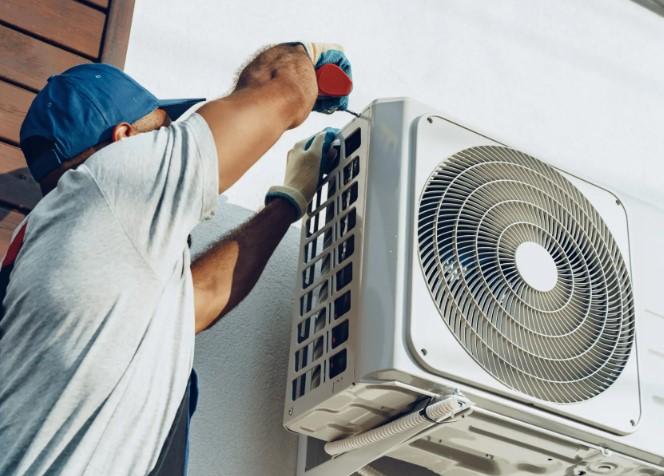
You can safely clean the outer surface of an outdoor AC coil yourself with the power off and a soft brush, but deep coil cleaning, especially the indoor evaporator coil, is best left to a certified technician. The delicate aluminium fins bend easily, the electrical parts sit close by, and the wrong chemical can damage the metal. If you want lasting results, combine simple homeowner care with scheduled AC maintenance in Abu Dhabi from a professional team.
Dirty coils are one of the quiet reasons an AC works harder and cools less. Fine desert dust, sand, and humidity form a layer over the fins that blocks heat transfer. The unit compensates by running longer, which raises electricity use and adds stress to the compressor. Knowing which cleaning jobs are safe for you, and which are not, helps you protect the system without creating new faults. Start with the basics, such as knowing how often to clean your AC filter, because filters and coils are closely linked.
This guide explains the two types of coils, what you can do at home, what to leave to a professional, and how often each job should happen. It builds on our seasonal AC maintenance checklist and adds detail on the parts that most homeowners never see. Before booking any visit, it also helps to understand the difference between AC maintenance and AC repair so you request the right service.
What Are AC Coils and Why Do They Get Dirty?
An AC has two main coils. The evaporator coil sits inside the indoor unit and absorbs heat from the room air. The condenser coil sits in the outdoor unit and releases that heat into the outside air. Both are made of copper tubing wrapped in thin aluminium fins.
The indoor coil collects dust that passes through worn or dirty filters, plus moisture that creates a sticky film. The outdoor coil faces dust storms, sand, leaves, and plastic debris. When either coil is covered, air cannot move heat efficiently, and the system loses capacity. Our teams offering AC maintenance services see this in villas and apartment blocks across the city, and prompt AC repair is often needed when neglected coils lead to frozen units or overheating.
Can You Clean AC Coils Yourself? DIY vs Professional
| Task | Safe for homeowners? | Reason |
|---|---|---|
| Wiping the outside of the indoor unit | Yes | Low risk, no contact with electrical parts |
| Cleaning or replacing filters | Yes | Simple and recommended monthly in summer |
| Clearing leaves and dust from around the outdoor unit | Yes | Improves airflow, with the power off |
| Gently brushing the outer face of the outdoor coil | Yes, with care | Fins bend easily, so use a soft brush only |
| Spraying strong chemicals on coils | No | Can corrode metal and harm you or the unit |
| Cleaning the indoor evaporator coil | No | Requires dismantling and protection of electronics |
| Using a pressure washer | No | Flattens fins and pushes water into electrical parts |
| Straightening bent fins | Professional preferred | Needs a fin comb and a steady hand |
How Do You Clean the Outdoor Coil Safely? Step by Step
- Switch off the AC at the remote, then at the isolator or breaker.
- Wait at least ten minutes so capacitors settle and the unit cools.
- Remove leaves, plastic, and loose debris from around the unit.
- Use a soft brush or a vacuum with a brush attachment along the direction of the fins.
- If needed, rinse gently from the inside outward with a low-pressure garden hose, avoiding the electrical box and the fan motor.
- Let the coil dry fully before switching the power back on.
- Restart the unit and check that airflow and cooling are normal.
Safety note: do not open panels, touch wiring, or clean while the unit is running. If the fins are crushed or the coil shows oily residue, stop and call a technician, because that can indicate a refrigerant leak.
What Should You Never Do When Cleaning AC Coils?
- Never use acid-based household cleaners or bleach on coils.
- Never spray water into the control box or fan motor.
- Never use a metal brush or scraper on the fins.
- Never clean the coil while the unit has power.
- Never bend the copper pipes when you move the outdoor unit.
- Never ignore ice or frost on a coil, since it needs proper diagnosis.
What Are the Signs That AC Coils Need Cleaning?
- Cooling is weaker even though the filter is clean.
- The unit runs for longer periods than usual.
- Your electricity use rises without any change in habits.
- Ice forms on the indoor coil or the copper pipe outside.
- The outdoor unit feels very hot or the fan runs constantly.
- A musty smell comes from the vents when the AC starts.
These signs overlap with other faults such as low refrigerant or a weak fan motor. A technician can confirm the true cause before any repair is made.
How Often Should AC Coils Be Cleaned in Abu Dhabi?
Outdoor coils usually need a visual check every month and a thorough cleaning at least once a year, and twice for homes near construction or open desert. Indoor coils generally need a professional clean once a year, or more often in busy kitchens, homes with pets, or offices with heavy use. Regular filter cleaning extends the gap between deep cleans.
What Happens If AC Coils Stay Dirty?
The effects build slowly, which is why many people do not link them to dirt. A dirty condenser coil raises the pressure inside the system, so the compressor works harder and draws more current. A dirty evaporator coil restricts airflow and can freeze, which leads to water leaks and warm air. Over months, both conditions shorten the life of the compressor, fan motors, and capacitors.
There is also an air quality angle. A damp, dusty evaporator coil can develop mould or a musty smell that circulates through the room. People with allergies may notice this first, which is another reason to schedule proper cleaning before the peak season starts.
How Do Indoor and Outdoor Coil Cleaning Differ?
Outdoor Condenser Coil
This coil is exposed, so it collects sand, leaves, and dust quickly. It can be cleaned with a soft brush and gentle rinse, but professionals use coil cleaners and proper rinse angles to avoid pushing dirt deeper into the fins.
Indoor Evaporator Coil
This coil is hidden behind the front panel and the filters. Cleaning usually needs panel removal, protection for the electronics, and a controlled rinse with a collection tray. Mistakes can cause water damage to the wall or the control board, so this is a job for trained technicians.
Ducted and Central Systems
Coils in air handling units and fan coil units are larger and sit in tight ceiling spaces. Cleaning them needs access panels, drain checks, and often a full system shutdown. Property managers should plan this work in advance to avoid disruption to tenants.
Filter Cleaning, Coil Cleaning, and Chemical Wash: What Is the Difference?
| Service | What it covers | Typical frequency |
|---|---|---|
| Filter cleaning | Removes dust from the indoor mesh filters | Every 1 to 3 months |
| General service | Filter, drain, basic coil clean, and performance checks | Once or twice a year |
| Deep coil cleaning | Detailed cleaning of the evaporator and condenser coils with approved products | Once a year or when dirt is heavy |
| Chemical wash | Full dismantle and wash of indoor parts for severe buildup | As advised by the technician |
Common Myths About Cleaning AC Coils
Myth: Cleaning the filter is enough
Filters stop most dust, but not all of it. Over time, fine particles and moisture build up on the coil and reduce performance.
Myth: A pressure washer gives the best results
High pressure bends fins and can drive water and dirt deeper into the coil. Gentle, controlled cleaning is safer and more effective.
Myth: Strong chemicals clean faster and better
Harsh chemicals can corrode aluminium and copper over time, leading to leaks. Only approved coil cleaners should be used.
Myth: Coil cleaning is only needed when the AC breaks
Scheduled cleaning prevents faults. Waiting until the unit fails is usually more expensive and more disruptive.
What Can You Do Between Professional Cleans?
Small habits protect the coils and keep service visits effective. Clean the filters monthly, keep plants and furniture at least half a metre away from the outdoor unit, and avoid storing items on or against it. After a sandstorm, check the outdoor unit and clear any visible dust once the power is off. Keep the drain outlet free of leaves and insects, and report any new smells or noises early. Together, these steps reduce the load on the coils and can stretch the time between deep cleans without any special tools.
What Does Professional Coil Cleaning Involve?
A certified technician isolates the power, protects the electrical parts and the surrounding area, and removes covers to reach the coil. An approved coil cleaner is applied and rinsed away with controlled pressure. Fins are combed straight, the drain tray and line are flushed, and the fan is cleaned. After reassembly, the technician checks airflow, temperature difference, refrigerant readings, and electrical current to confirm that the unit performs correctly.
All work on HVAC and electrical parts should follow UAE safety standards and the technical practices of the Abu Dhabi Department of Municipalities and Transport (DMT). Professional teams also provide follow-up advice on cleaning schedules and note any wear or leaks for future attention.
How SACGM Supports Coil Cleaning and Full AC Service
Special Air Condition General Maintenance (SACGM) has 20+ years of experience providing reliable AC repair and home maintenance services across Abu Dhabi. We serve homeowners, property managers, and businesses with certified appliance repair technicians, and our team handles all major brands, models, and types of household equipment. From central AC repair Abu Dhabi callouts to routine air conditioner service Abu Dhabi visits and wider HVAC repair Abu Dhabi projects, we aim for clear communication and dependable follow-up.
A diagnostic site visit carries a visit charge of 100 AED, and we respond quickly to service requests. You can call +971523476261 or email mozammalhoque2020@gmail.com, or find us at Musaffah M/6 Building No: 78 Sector No: 06, Abu Dhabi, United Arab Emirates. Details on our home maintenance Abu Dhabi and appliance repair Abu Dhabi services are available at https://specialairconditiongeneralmaintenance.com/.
Frequently Asked Questions
Can I use a hose to clean my outdoor AC unit?
A gentle, low-pressure rinse is acceptable when the power is off and you avoid the electrical box. Never use a pressure washer.
How do I know if my indoor coil is dirty?
Weak cooling, a musty smell, and ice on the coil are common signs. Because the coil is hidden, a technician inspection gives a definite answer.
Does coil cleaning reduce electricity use?
It can, because clean coils transfer heat better and the compressor runs for shorter periods. Results depend on the condition of the rest of the system.
Is it safe to clean coils while the AC is on?
No. Always switch off the power and wait before cleaning. Moving fans and live wiring create real risks.
How long does professional coil cleaning take?
A typical split unit takes about one to two hours, depending on how dirty it is and how easy it is to access.
Conclusion
Homeowners can safely clear debris and brush the outer face of the outdoor coil, but deep cleaning and fin repair belong to certified technicians. Regular filter care, a yearly professional service, and early attention to warning signs keep the coils working well. Clean coils mean better cooling, lower strain on the compressor, and a longer life for your AC.
